


Denver’s skyline is a forest of yellow steel. As the city undergoes a massive high-rise construction boom, tower cranes have become permanent fixtures above our most crowded neighborhoods. While these machines are engineering marvels, they are also massive liabilities. When a crane collapses or drops a load in a dense urban area like LoDo or Cherry Creek, the impact is never “minor.” At Lampert & Walsh, LLC, we know that behind every headline about a “construction mishap” is a family whose life has been upended. Proving liability in these cases requires a specialized Denver crane accident lawyer who can dig through maintenance logs, weather data, and black-box telemetry to determine if a catastrophe was caused by a gust of wind or a company cutting corners on safety.
The Rising Risk of High-Rise Construction Injury CO
The scale of urban development in Denver has increased the risk profile for both workers and the public. According to the Occupational Safety and Health Administration (OSHA), crane-related incidents intersect with the “Fatal Four” leading causes of construction deaths: struck-by, caught-in/between, and falls. National data from 2024 and 2025 indicates that nearly 45% of crane accidents globally are attributed to operator error, while mechanical failure accounts for roughly 20% of incidents.
In a city as windy as Denver, the “sail area” of a crane boom becomes a critical safety factor. When a developer fails to properly secure a crane for high-altitude wind gusts, a common occurrence in the Front Range, the result can be a high-rise construction injury CO that affects everyone from the operator in the cab to the commuter on the sidewalk below.
Common Causes of Crane Accidents in Urban Centers
| Factor | Primary Driver | Legal Implication |
|---|---|---|
| Overloading | Pushing equipment past rated capacity | Strict commercial construction negligence |
| Improper Rigging | Loads not secured by qualified persons | Violation of OSHA Subpart CC |
| Mechanical Wear | Cracked pins, frayed wire ropes | Failure to perform mandatory inspections |
| Ground Failure | Poor outrigger support or unstable soil | Engineering and site-prep liability |
Investigating the Cause: Forensic Engineering and Site Forensics
Determining why a crane failed is a technical battle. A crane collapse investigation doesn’t just look at the moment of the crash; it looks at the weeks and months leading up to it. At Lampert & Walsh, LLC, we utilize forensic engineers to perform metallurgical testing on failed parts and aerodynamic analysis on the crane configuration during the event.
Key areas of investigation include:
- Maintenance Records: Under OSHA 1926.1412, cranes must undergo shift-by-shift, monthly, and annual inspections. If a cracked bolt or leaking hydraulic line was noted in a log but never fixed, the company is liable.
- Operator Certification: Was the operator certified by an accredited organization like the NCCCO? Did the employer evaluate the operator specifically for that model of crane as required by federal law?
- Black Box Data: Most modern cranes have Load Moment Indicators (LMIs) that record exactly how much weight was lifted and at what radius. This data can prove if a driver was “pushing the limits” of the machine.
Pedestrian Injury Site: When Construction Spills into the Street
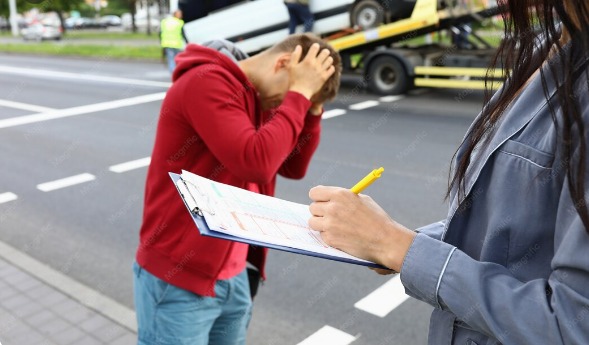
Denver’s dense layout means that a crane’s “swing radius” often extends over public sidewalks and roads. A pedestrian injury site’s claim is unique because the victim is not an employee covered by Workers’ Comp; they are a bystander protected by general negligence laws.
According to Denver’s Vision Zero Statistics, traffic and pedestrian fatalities in the city saw a significant increase in 2025, reaching 93 deaths. While most are vehicle-related, the “struck-by” risk from falling construction debris or a collapsing boom is a major urban hazard. If a contractor failed to establish a proper exclusion zone or did not use flaggers during a critical lift, they are responsible for the harm caused to passersby.
Tower Crane Safety Regulations: Federal vs. Local
Tower cranes are governed by 29 CFR 1926 Subpart CC, the most comprehensive set of federal tower crane safety regulations. These rules mandate that an “Assembly/Disassembly Director” supervises any movement or “jumping” of the crane.
In addition to federal rules, the Denver Revised Municipal Code and the International Building Code (with local amendments) set specific standards for how equipment must be anchored to the ground or a building core. In many cases, a collapse is traced back to a “base failure”, where the engineering firm failed to account for the specific pressures the crane base would exert on the foundation. This opens the door for a third-party claim against the engineering firm, moving beyond standard insurance limits.
Crane Safety Standards and Mandatory Checks
| Inspection Type | Frequency | Required Personnel |
|---|---|---|
| Pre-Operation | Every Shift | Certified Operator |
| Documented Monthly | Every 30 Days | Competent Person |
| Comprehensive Annual | Every 12 Months | Qualified Inspector |
| Load Testing | After Assembly / Modification | Qualified Person |
Commercial Construction Negligence: Beyond the Operator
While it is easy to blame the person in the cab, commercial construction negligence often goes much higher. We look at the culture of the job site. Did the general contractor pressure the crew to continue lifting during a “high wind alert”? Did the rental company provide a crane with “timed-out” components that should have been replaced years ago?
Under Colorado law, multiple parties can share faults. We may pursue claims against:
- The General Contractor for site safety failures.
- The Crane Owner for maintenance neglect.
- The Manufacturer for design defects in the safety sensors.
- The Rigger fails to secure the load properly.
Rebuilding After a Construction Disaster
Denver’s growth should not come at the cost of human lives. When a crane fails, it isn’t just a mechanical “glitch”; it is a failure of a multi-layered safety system that was supposed to protect us all. We are dedicated to peeling back the layers of corporate and mechanical failure to find the truth. We have the forensic resources to challenge the biggest construction firms and the empathy to guide you through the aftermath of a catastrophic injury. If you or a loved one has been a victim of a crane accident or high-rise negligence, do not let the complexity of the industry prevent you from seeking recovery. To protect your rights and ensure those responsible are held accountable, please contact us today for a comprehensive evaluation.
Frequently Asked Questions (FAQs)
Can a pedestrian sue if they were hit by falling debris near a crane?
Yes. Unlike construction workers, pedestrians are not limited by Workers’ Compensation. You can sue the construction company, the crane operator, and the developer for all damages, including full pain and suffering and emotional distress.
What is a "Load Moment Indicator" (LMI)?
An LMI is a safety device that prevents a crane from lifting a load that is too heavy for its current angle and radius. If an LMI was disabled or ignored, it is a primary piece of evidence for a crane collapse investigation.
How do you prove wind causes a crane to fall?
We use Scarlet Anemometer data and local NWS reports to determine the wind speed at the time of the crash. If the winds exceeded the manufacturer’s “out-of-service” limits and the company didn’t stop working, they would be negligent.
Who is responsible for "rigging" the crane load?
OSHA requires a “Qualified Rigger” whenever workers are in the fall zone or when a load is being attached. If a rigger without proper training secured a load that later fell, the subcontractor who hired them is liable.
What if the crane company is out of state?
Many cranes used in Denver are rented from national companies. We use the Colorado Long-Arm Statute to bring these companies into Colorado courts, ensuring you don’t have to travel across the country to seek justice.