

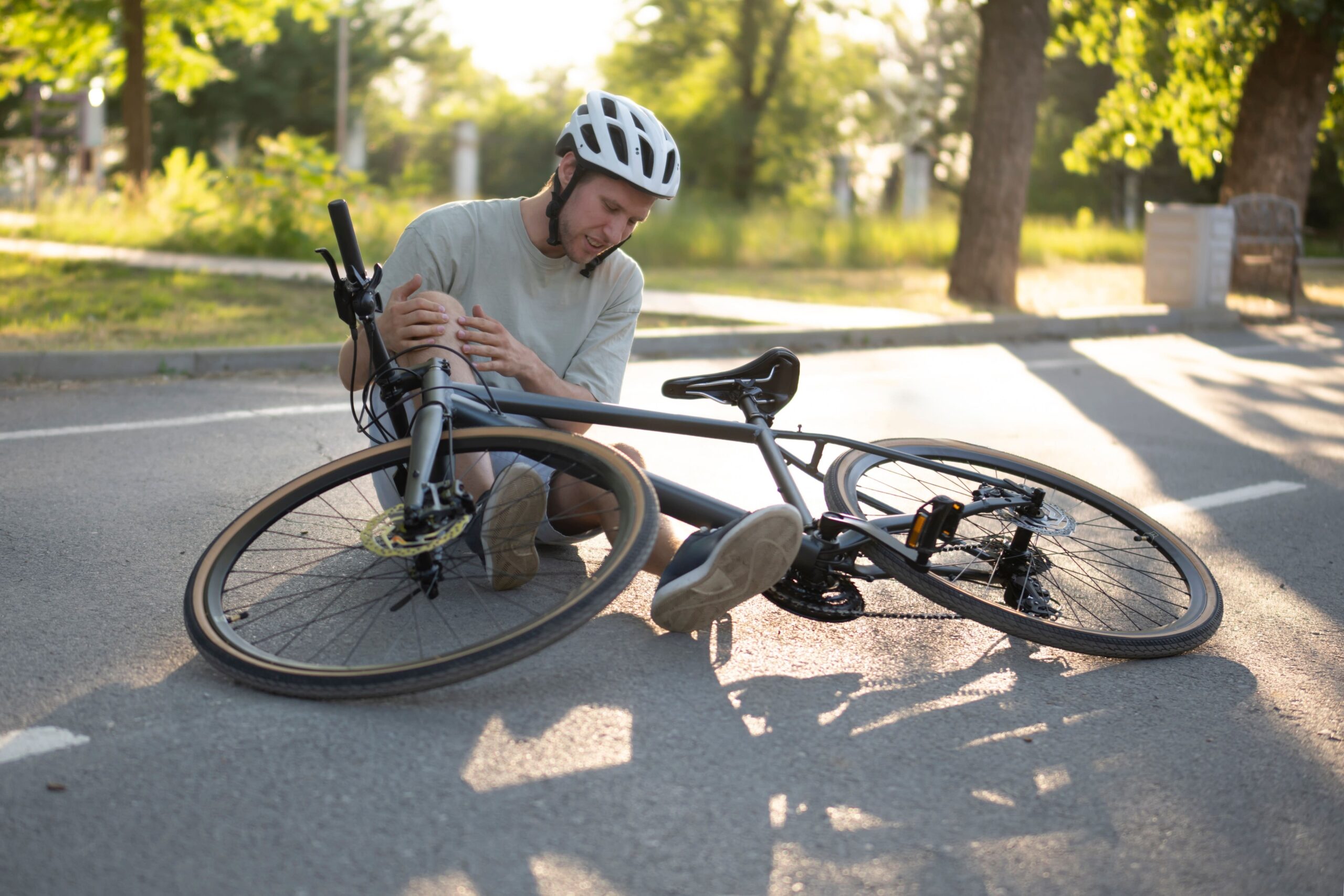

Cyclists in Colorado have many of the same rights and responsibilities as drivers on the road. However, state law also includes specific rules for bicycle riders involving traffic signals, passing, roadway positioning, equipment, lighting, and interactions with pedestrians.
Knowing these rules can help cyclists understand their responsibilities and may also become important after a crash. When a bicycle accident occurs, questions about right-of-way, traffic violations, road position, and other circumstances can affect how liability is evaluated. If you were injured in a bicycle accident, a bicycle accident attorney can review the circumstances of the crash and explain how Colorado law may apply to your situation.
1. Cyclists Generally Have the Same Rights as Drivers
Colorado law generally gives people riding bicycles the same rights and duties applicable to drivers of other vehicles, except where specific bicycle rules or other exceptions apply. This means cyclists generally have the right to use public roads and must follow applicable traffic rules.
For drivers, this also means cyclists should be treated as legitimate road users rather than as obstacles that can simply be ignored or passed without appropriate caution. Understanding these shared rights and responsibilities is important when determining who may have contributed to a bicycle accident.
2. Colorado's Three-Foot Passing Law
One of the most important Colorado bicycle laws concerns how motorists pass cyclists. Colorado’s Three Foot Law requires drivers and motorcyclists to give bicyclists and e-bike riders at least three feet of space when passing. If there is not enough room to safely provide that distance, the driver must slow down and remain behind the cyclist until it is safe to pass.
For example, a driver should not attempt to squeeze past a cyclist when oncoming traffic makes a safe pass impossible. A collision resulting from an unsafe passing maneuver may raise questions about whether the driver violated the applicable passing requirements.
3. The Safety Stop Law
Colorado’s Safety Stop Law allows eligible bicyclists to approach certain controlled intersections differently from drivers. Under the law, bicyclists may treat a stop sign as a yield sign when the required safety conditions are met. At a red light, cyclists must first stop and yield before proceeding under the circumstances permitted by law.
For stop signs, riders must slow down and stop if necessary for safety. If stopping is not required for safety, they must slow to a reasonable speed of 10 mph or less and yield to traffic and pedestrians in or approaching the intersection. At a red light, a cyclist must stop and yield to traffic and pedestrians before proceeding when permitted. Understanding these rules can be particularly important when a crash occurs at an intersection.
4. Cyclists Must Follow Applicable Traffic Rules
Being on a bicycle does not mean a rider is exempt from traffic regulations.
Cyclists generally must comply with applicable traffic laws, including rules involving:
Right-of-way
Traffic signals
Turning
Lane use
Yielding
Stop signs
Pedestrians
Speed and safe operation
Colorado’s bicycle-specific rules modify certain requirements in ways that apply specifically to cyclists, so the circumstances of each situation matter. If a bicycle accident occurs, investigators and insurance companies may examine whether each road user followed the applicable rules.
5. Riding on the Road
Colorado recognizes bicycles as vehicles for many purposes, meaning cyclists generally have the right to use the roadway. CDOT advises cyclists to ride as far right as practicable when traveling on a road with the flow of traffic.
There are circumstances where a cyclist may need to move away from the right side of the roadway, such as avoiding hazards or positioning for a turn. A cyclist’s exact position at the time of a crash can therefore be relevant when determining how the accident occurred.
6. Bicycle Lanes and Motor Vehicles
Bike lanes are designed to provide space for bicycle travel, but cyclists and motorists still need to interact safely where lanes intersect or vehicles need to cross them. Drivers should check for cyclists before turning across a bicycle lane, entering a driveway, or making other movements that could cross a cyclist’s path.
Colorado law also includes specific requirements concerning drivers yielding to bicyclists in bicycle lanes. If a driver turns across a bicycle lane without properly checking for a cyclist, that conduct may become relevant in a resulting injury claim.
7. Rules for Riding on Sidewalks and Crosswalks
Bicycle rules can differ when a cyclist is traveling on a sidewalk, pedestrian path, or crosswalk. CDOT states that cyclists riding on sidewalks, pedestrian paths, or crosswalks must yield to pedestrians and should audibly signal when passing them.
This is important because cyclists do not have unlimited priority over pedestrians simply because they are operating a bicycle. When an accident occurs in an area shared by cyclists and pedestrians, the specific location and actions of everyone involved may need to be examined.
8. Lighting and Reflective Equipment
Colorado requires bicycles and certain other devices to display lighting and reflective equipment between sunset and sunrise, as well as during other conditions when there is insufficient light or unfavorable atmospheric conditions.
Proper visibility can be particularly important when riding:
At night
During low-light conditions
In poor weather
On roads with limited visibility
CDOT also recommends using lights and reflective clothing to make cyclists more visible to drivers and pedestrians.
9. Bicycle Equipment and Brakes
Colorado law includes equipment requirements for bicycles, including brake requirements. The Colorado Revised Statutes identify bicycle brake requirements under C.R.S. § 42-4-223.
Cyclists should regularly check their brakes, tires, chains, gears, and other components for damage or wear. Equipment condition can become relevant after a crash, particularly when one party argues that a mechanical problem contributed to the accident.
10. Helmets and Protective Equipment
Although helmets are an important safety measure, helmet requirements can depend on the rider’s age and applicable local rules. CDOT strongly recommends that all cyclists wear properly fitting helmets and protective equipment while riding.
Cyclists should also check local ordinances because cities and counties may have additional rules that apply in particular areas. If a crash occurs, questions about helmet use should be considered separately from the question of who caused the accident.
11. Drivers Also Have Responsibilities Around Cyclists
Colorado bicycle laws are not only about what cyclists must do. Drivers have responsibilities when sharing the road with bicycles. CDOT advises motorists to yield to bicyclists, check blind spots, watch for cyclists when turning or backing up, and provide at least three feet of clearance when passing.
Drivers should also avoid distracted driving and adjust their speed for roadway and traffic conditions. A driver’s failure to follow these responsibilities can become important evidence in a bicycle accident claim.
12. Local Bicycle Rules May Also Apply
Colorado state law provides a statewide framework for bicycle operation, but local governments can also regulate bicycle operation in certain circumstances. Colorado law specifically recognizes local authority to regulate bicycles within incorporated cities and towns.
That means riders should pay attention to local signs, lane markings, and ordinances in addition to statewide Colorado bicycle laws. Rules can be especially important in areas with extensive bicycle infrastructure or designated bike routes.
How Colorado Bicycle Laws Can Affect an Injury Claim
Traffic laws can become important when determining responsibility after a bicycle accident.
For example, an investigation may consider whether:
A driver gave the required passing distance
A driver yielded to a cyclist
A cyclist had the right-of-way
A traffic signal or stop sign was involved
A cyclist was riding in an appropriate location
A vehicle crossed a bicycle lane
Lighting or visibility affected the accident
Another road user violated a traffic rule
Evidence such as photographs, witness statements, police reports, traffic-camera footage, dashcam recordings, and road markings may help establish what happened. If liability is disputed, a bicycle accident attorney can review the available evidence and explain how the applicable rules may affect the claim.
What Should You Do After a Bicycle Accident?
If you are involved in a bicycle crash, prioritize your safety and seek medical attention when necessary.
If you are able to do so safely, consider:
Calling 911 when appropriate.
Getting medical attention for injuries.
Photographing the accident scene and damage.
Collecting contact information from witnesses.
Obtaining the driver’s insurance and vehicle information.
Preserving the bicycle and damaged equipment.
Keeping medical bills and treatment records.
Avoiding statements that speculate about who was at fault.
Keeping copies of communications with insurance companies.
Prompt documentation can help preserve information that may later be important to an injury claim.
Protecting Your Rights After a Bicycle Crash
Understanding Colorado bicycle laws can help riders recognize their responsibilities and understand the rules that apply when sharing the road with motorists.
If you are injured in a bicycle accident, the question of liability may depend on traffic rules, evidence, road conditions, and the actions of everyone involved. If you were injured in a Colorado bicycle accident, 5280 Injury Law can review the circumstances of your crash and help you understand your potential legal options.
Frequently Asked Questions (FAQs)
Do bicycles have the same rights as cars in Colorado?
Generally, yes. Colorado law gives bicyclists the same rights and duties applicable to drivers, subject to bicycle-specific rules and other exceptions.
How much space must a driver give a cyclist when passing?
Colorado’s Three Foot Law requires drivers and motorcyclists to provide bicyclists and e-bike riders at least three feet of space when passing.
Can cyclists go through a stop sign without stopping in Colorado?
In certain circumstances, yes. Colorado’s Safety Stop Law allows eligible cyclists to treat a stop sign as a yield sign when the applicable safety requirements are satisfied.
Do cyclists have to stop at red lights in Colorado?
Yes, cyclists must stop at a red light before proceeding under the circumstances permitted by Colorado’s Safety Stop Law. They must yield before proceeding when the law allows them to continue through the intersection.
Can Colorado bicycle laws affect a bicycle accident claim?
Yes. Traffic rules can be relevant when determining how an accident occurred and whether the actions of a cyclist, driver, or another party contributed to the crash.